

The difference between menorrhagia and a normal period
Have you ever had heavy vaginal bleeding but assumed it was perfectly normal? Perhaps your gynaecologist even confirmed that you're healthy and there's nothing to worry about. All the same, your period shouldn't interfere with your daily life or your general wellbeing. So if you find yourself changing your pad every two hours, a common menstrual disorder could be behind it: menorrhagia.
Menorrhagia (heavy periods) – what is it & how does it present?
Menorrhagia is the medical term for excessively heavy and prolonged menstrual bleeding. Although heavy bleeding worries many women, for most the blood loss isn't great enough to be classed as menorrhagia.
Symptoms – how does menorrhagia present?
With menorrhagia, you simply can't get on with your day as usual: the heavy blood loss and period cramps become a real problem.
Of course, there's no universal medical rule about exactly how much blood is lost during a normal period – but from your own experience you'll soon notice whether your period is heavier than usual. Menorrhagia is usually accompanied by persistent lower abdominal pain and large blood clots. We discuss blood clots in detail in our article, which you'll find here.
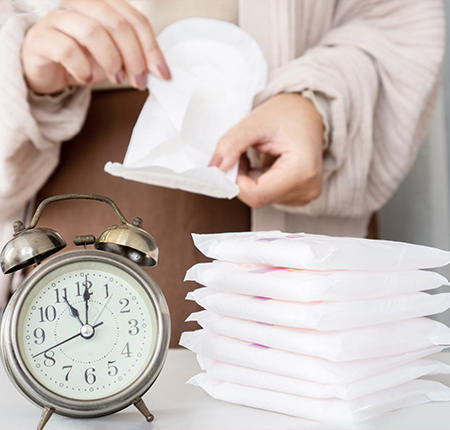
Other signs and symptoms of menorrhagia include:
- soaking through one or more sanitary pads every hour for several hours in a row
- needing to use double protection to manage the bleeding
- having to wake up at night to change your pad
- bleeding that lasts longer than 7 days
- having to limit your daily activities because of the heavy bleeding
- typical symptoms of anaemia such as tiredness, lack of energy or breathlessness
Normal periods vs. heavy periods
The menstrual cycle usually lasts 28 days (varying between 25 and 35 days), with the bleed itself lasting around 4–5 days. It becomes a concern when the bleeding continues for more than 7 days and you need to change your pad less than two hours apart.
You can read more about menstruation and everything that goes with it in our article Menstruation – EVERYTHING you need to know.
During a normal period, total blood loss is around 30–40 millilitres; with menorrhagia, the volume of vaginal bleeding is at least twice that.
When should you see a doctor?
If you notice the following symptoms, it's essential to see a doctor:
- vaginal bleeding so heavy that you soak through at least one pad an hour for more than two hours
- bleeding between periods or irregular vaginal bleeding
- any vaginal bleeding that occurs after the menopause
Heavy periods – causes
Sometimes the cause of the bleeding remains unknown; in other cases it points to a more serious condition. These include:
- Hormonal imbalance: in a normal cycle, the balance between oestrogen and progesterone regulates the build-up of the womb lining, which is then shed during menstruation. If this balance is disrupted, the lining builds up excessively, resulting in very heavy bleeding.
- Ovarian dysfunction: if no egg is released during the cycle, the body doesn't produce progesterone – which can trigger menorrhagia.
- Uterine fibroids: these benign (non-cancerous) tumours develop in the womb during a woman's reproductive years and can cause very heavy or prolonged menstrual bleeding.
- Intrauterine devices: menorrhagia is one of the possible side effects of contraception with a coil.
- Pregnancy complications: a single late and very heavy bleed may be the result of a miscarriage, or may be caused by an unusual position of the placenta.
- Cancer: cancer of the womb or cervix can cause heavy bleeding – this is particularly relevant after the menopause.
- Inherited bleeding disorders: some blood clotting disorders are genetic and can lead to abnormal periods.
- Medication: anti-inflammatories, hormonal preparations (oestrogens, progestogens) or anticoagulants can contribute to heavy and prolonged bleeding.
- Other conditions: liver disease, kidney disease and other medical conditions can be associated with menorrhagia.
Risk factors – who can develop menorrhagia?
Depending on your age and any other health conditions, certain risk factors may explain why you're experiencing menorrhagia. In a normal cycle, the release of the egg prompts the body to produce progesterone – the female hormone responsible for keeping periods regular. If no egg is released, the resulting low level of progesterone can cause heavy bleeding.
In teenagers, menorrhagia is usually due to anovulation. Anovulatory cycles are particularly common during the first year after a girl's first period.
In older women, menorrhagia is typically caused by a condition affecting the womb, such as fibroids or the conditions already mentioned.
Menorrhagia – diagnosis
To make a diagnosis, your doctor will ask about your medical history and your menstrual cycles. You'll most likely be advised to keep a cycle diary – noting your bleed-free days along with details about how heavy the bleeding is, how many pads you use and so on.
Other investigations your doctor may recommend include:
- blood tests
- smear test (cervical screening)
- endometrial biopsy
- ultrasound scan
- sonohysterography
- hysteroscopy
Menorrhagia – treatment
Treatment is tailored to the individual and depends on factors such as:
- your general health and medical history
- the cause and severity of the condition
- how well you tolerate certain medicines, procedures and therapies
- your plans for having children
- how the symptoms affect your lifestyle
- your personal preferences
There's no one-size-fits-all treatment, then – but it usually involves medication and/or a medical procedure.
Medical treatment
For menorrhagia, your doctor may prescribe non-steroidal anti-inflammatory drugs, tranexamic acid, the combined pill, oral progesterone or a hormonal intrauterine device. If you're anaemic, iron supplements may also be prescribed.
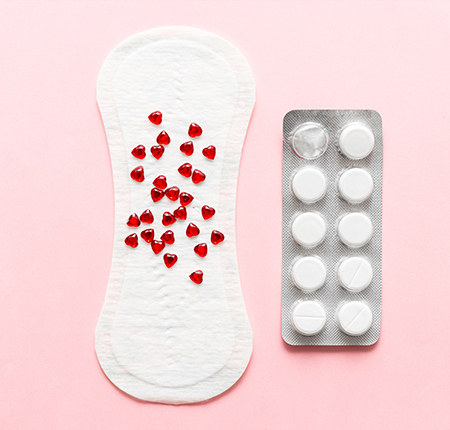
Surgical treatment
If medication hasn't worked, surgical options may be recommended, namely:
- Dilatation and curettage – the doctor widens the cervix and removes tissue from the womb lining to reduce the bleeding. This procedure is common and effective, but may need to be repeated if the menorrhagia returns.
- Uterine artery embolisation – for women whose menorrhagia is caused by fibroids, the aim is to shrink the fibroids by blocking the uterine arteries and cutting off their blood supply.
- Ultrasound-guided procedure – this treats bleeding caused by fibroids by shrinking them; no incisions are needed.
- Myomectomy – in this procedure the fibroid is surgically removed; depending on its size, number and position, it's carried out via the abdomen or through the vagina and cervix.
- Hysterectomy – this procedure removes the womb and cervix. It's a permanent solution that results in infertility and brings periods to an end.
Untreated menorrhagia – complications
If menorrhagia goes untreated, complications such as anaemia and severe pain can develop.
Anaemia results from blood loss and the consequent drop in red blood cells. Menorrhagia can lower your iron levels so much that the risk of iron-deficiency anaemia increases. Signs and symptoms include pale skin, weakness and fatigue. While diet plays an important role, heavy bleeding makes the problem considerably worse.
The severe pain occurs alongside menorrhagia and takes the form of painful, long-lasting cramps.
Preventing menorrhagia
To look after yourself properly, you should have a full gynaecological check-up once a year. Your doctor can then advise you according to your needs and spot any potential problems early.
We've also got a few tips for you:
- Eat well and maintain a balanced lifestyle, free from stress and sleep deprivation.
- Make time for regular exercise.
- Take intimate hygiene seriously and change your pads regularly.
- Use anti-inflammatories if you want to ease period pain.
Heavy periods during the perimenopause
The perimenopause affects both the length and frequency of your periods: bleeds tend to become shorter and cycles can become irregular. Light bleeding between periods is common – so that you always feel secure and confident, choose 100% organic protection. The revolutionary ENROUSH products are made by women for women, putting your health and the care of your body first.
Our pads and tampons are made from 100% organic cotton and contain essentially nothing we wouldn't use on our own bodies. No chemicals, no plastic, no chlorine – nothing that could upset the pH balance of your intimate area. And best of all: you can say goodbye to irritation and vaginal dryness. Comfortable and secure – let nature take care of your period worries with Enroush pads and tampons, kind to you and kind to the planet. We care about you and your wellbeing.
Heavy bleeding after childbirth
Immediately after giving birth, women experience very heavy bleeding – this is nothing to worry about. It's at its heaviest during the first 5–7 days after the birth and lasts a total of 3 to 4 weeks.

Medium, super or extra absorption

Low, medium or super absorption

Low or medium absorption


and happily breaking taboos!


