

The Follicular Phase – What It Is, How Long It Lasts & What Happens During the Follicular Phase
The entire first half of your menstrual cycle makes up the follicular phase. Put another way: you spend roughly half of every month in this phase. That's why it's so important to understand what's happening in your body during these days – and, above all, how the typical hormonal fluctuations affect you.
In this article you'll learn what the follicular phase is, how it works and how you can support your body naturally during this important stage of your cycle.
What is the follicular phase?
The follicular phase is one of the four phases of the menstrual cycle – the one in which a new egg matures in the ovaries.
This process is the result of the hormonal changes that take place in your body month after month throughout your reproductive life, preparing you for a possible pregnancy. The follicular phase begins on the first day of your period and ends with ovulation. It is followed by the luteal phase and then the next period, which marks the start of a new cycle and a new follicular phase.
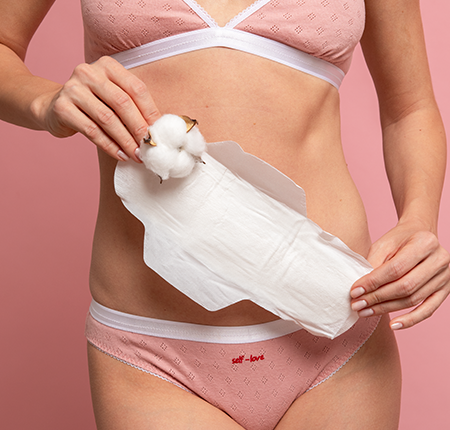
During menstruation, the body sheds the thickened lining of the womb through vaginal bleeding. Menstrual bleeding usually lasts between 3 and 7 days. During this time you can use pads and tampons made from 100% organic cotton to feel safe and comfortable and to avoid staining your clothes.
The first day of your period also marks the start of the follicular phase, during which the ovarian follicles develop and an egg matures. This phase lasts until ovulation.
During ovulation, which lasts just 24 hours, the ovary releases the mature egg into the fallopian tube, where it can be fertilised and a pregnancy can begin.
The luteal phase follows immediately after ovulation: the follicle that released the egg produces hormones that stimulate the build-up of the womb lining (endometrium), creating a favourable environment for pregnancy. If fertilisation – and therefore pregnancy – doesn't occur, this endometrium is shed with the next period and a new cycle begins.
How do you know you're in the follicular phase – signs & symptoms
Unlike menstruation, where bleeding is a visible and very obvious symptom, the follicular phase doesn't have equally obvious specific signs. Even so, there are a few changes in your body that can tell you you're in the follicular phase.
If, for example, you take your temperature every morning as soon as you wake up, it can be a clear indicator of which phase of your cycle you're in. During the follicular phase, your temperature is usually between 36.1 and 36.45 °C, whereas it may rise slightly around ovulation and during the luteal phase.
Because of the hormonal fluctuations during this period, other signs of the follicular phase may include:
- More energy, motivation and mental clarity.
- Increased libido and a better mood.
- Changes in cervical mucus (during the follicular phase, discharge is whitish, milky and of a creamier, thicker consistency).
What happens during the follicular phase
As a woman, you are born with a set ovarian reserve. At birth there are around one million eggs in your body, but this reserve declines as you get older. With your first period, your body begins maturing these eggs.
So in every menstrual cycle, roughly 11 to 20 eggs begin to mature during the follicular phase. And by the end of each follicular phase, only one of these eggs fully matures:
- The pituitary gland releases FSH (follicle-stimulating hormone), which prompts the ovaries to form follicles – those fluid-filled sacs in which eggs can mature.
- A dominant follicle emerges, developing faster than the others and allowing the egg inside it to mature fully by the time ovulation arrives.
- The dominant follicle releases more oestrogen into the body, stimulating the build-up of the womb lining to support a possible pregnancy.
- Rising oestrogen levels cause FSH levels to fall, which halts the development of the remaining follicles. These are then reabsorbed by the body while the dominant egg matures fully.
How long does the follicular phase last
The follicular phase is the longest phase of the menstrual cycle and can last between 14 and 21 days. Its length depends on how much time the egg needs to mature. The process begins on the first day of your period and ends on the day of ovulation.
The difference between the follicular phase and the other phases of the cycle
The follicular phase differs from the other phases of the menstrual cycle in a number of ways.
Functionally, the follicular phase is the period during which the follicles develop in the ovaries. During ovulation, by contrast, the mature egg is released from the ovary.
Hormonally, oestrogen levels rise during the follicular phase, whereas progesterone levels increase during the luteal phase.
In terms of timing within the cycle, the follicular phase takes place in the first half, that is between days 1 and 14. Ovulation occurs on day 14, and the luteal phase falls in the second half of the cycle, days 15 to 28.
And of course, you feel noticeably different during the follicular phase compared with the other phases: thanks to higher oestrogen levels, you have more energy and productivity, a better mood and a stronger sex drive.

What's best to do during the follicular phase
Since the follicular phase is one of the most productive times of your cycle – energy levels and mental focus improve as oestrogen rises – you can adapt your lifestyle so that it works in harmony with the changes in your body:
- Eat foods that support oestrogen production, such as green vegetables, flaxseeds or sesame seeds, fresh fruit and fermented foods.
- Try different types of exercise, including more intense strength or cardio sessions that match your high energy levels.
- Make the most of your mental clarity to focus on your projects – your brain is now in an ideal state for planning, learning and creative work.
How to support the follicular phase naturally
While your body prepares for ovulation, the follicular phase offers the perfect opportunity to look after yourself properly. Support this phase by prioritising rest, eating a nutrient-rich diet and establishing habits that contribute to hormonal balance and recovery.
Managing stress and sleeping well
High stress levels can disrupt your hormonal balance and follicular development – which is why how you manage it matters. Try relaxation techniques such as mindful breathing, meditation, yoga or walks in nature. Sleep quality is just as important: aim for at least 7 to 8 hours a night.
Possible supplements
Certain supplements such as omega-3, vitamin B6, zinc or magnesium can support hormonal balance and help the liver metabolise oestrogen. Always speak to your doctor first, though, to find out whether such supplements are right for you – and never start taking anything (not even simple vitamins) without medical advice.
Observing your body and tracking your cycle
Pay attention to how your body communicates with you. Note changes in cervical mucus, temperature, mood and energy so you know exactly which phase of your cycle you're in. These signs can be especially important if you want to identify your fertile days and conceive.
Imbalances and signs that the follicular phase isn't going as it should
When something isn't right during the follicular phase, it's not just your energy levels and emotional balance that suffer, but also your fertility and general wellbeing. So how do you recognise that something isn't working as it should?
The most common signs of imbalance in the menstrual cycle and the follicular phase include:
- Irregular periods or absent periods (amenorrhoea): may indicate a prolonged follicular phase or a lack of ovulation.
- Delayed or absent ovulation: without ovulation, the follicular phase becomes excessively long, which can disrupt your hormonal balance.
- Symptoms of oestrogen levels that are too low or too high: including mood swings, headaches, acne and breast tenderness.
When to see a doctor during the follicular phase
It's perfectly normal for cycle symptoms and even the length of the follicular phase to vary slightly – including from month to month. However, if symptoms persist or worrying signs appear, it's important to seek medical advice so that imbalances can be identified and treated early.
Book an appointment with your gynaecologist as soon as possible if you notice that:
- your cycles are very short or very long.
- ovulation hasn't occurred for several months.
- you have severe symptoms (severe acne, intense abdominal pain, irregular bleeding).
you've been trying to conceive for 6 to 12 months without success.

Frequently asked questions about the follicular phase
As with any other topic relating to your body and your health, the follicular phase can raise plenty of questions – especially if you're tracking your cycle or noticing unusual symptoms. In this section you'll find clear answers to the most common questions about this phase of the cycle.
Can you ovulate if the follicular phase is very short?
Yes. Although it's rare, ovulation is still possible even if the follicular phase lasts only 10 to 14 days. A short follicular phase can, however, lead to early ovulation, which may affect egg quality and the chances of conceiving.
Early ovulation isn't a problem as long as you ovulate regularly. If you repeatedly notice short follicular phases, though, it's worth tracking your cycle and speaking to a specialist – particularly if you're trying to conceive.
How does the pill affect the follicular phase?
Hormonal contraceptives suppress the natural follicular phase by preventing ovulation. In practical terms, they inhibit follicular development in the ovaries and keep oestrogen levels under control.
How is the follicular phase linked to polycystic ovary syndrome (PCOS)?
In women with polycystic ovary syndrome, the follicular phase is often disrupted by hormonal imbalances that prevent proper follicle maturation and ovulation. This can lead to irregular or absent cycles.
Which hormone tests are done during the follicular phase and on which day?
Hormone tests to measure FSH, LH, oestradiol and prolactin are usually recommended in the first days of the follicular phase (days 2 to 5 of the cycle). These tests can provide important insights into ovarian function and hormonal balance.
Is it normal to have no cervical mucus during the follicular phase?
In the first days of the follicular phase, it's normal for cervical mucus to be absent or very scant. As oestrogen levels rise and ovulation approaches, the mucus should become more plentiful, clearer and stretchier – rather like egg white. A complete absence of mucus over a longer period may point to a hormonal imbalance.
Can you get pregnant during the follicular phase?
Yes. The likelihood of pregnancy is lower at the start of the follicular phase, but it increases as ovulation approaches. Sperm can survive in the reproductive tract for up to 5 days, so intercourse towards the end of the follicular phase can result in conception. Your chances of getting pregnant are highest in the 5 days before ovulation and on the day of ovulation itself.
Image source: Pexels.com

Medium, super or extra absorption

Low, medium or super absorption

Low or medium absorption


and happily breaking taboos!


