

The Withdrawal Method (Coitus Interruptus) – EVERYTHING You Need to Know
Coitus interruptus as a method of contraception? Probably best not! These days we know there are far more effective alternatives. Yet through a lack of information, and following the classic line of "it won't happen to me", many women used to say "yes" to it – and some still do today, without knowing the risks they're exposing themselves to.
Also known as the withdrawal method, this practice has its origins in the ancient Roman and Greek civilisations, which favoured small families and therefore used a variety of contraceptive methods – coitus interruptus among them. The problem is this: as old as the method is, it has just as many drawbacks. Unfortunately, not all women know this and, worse still, its age is taken as proof of its effectiveness, thereby winning the trust of many poorly informed couples. Much like the calendar method, with which it is often combined – another age-old way of calculating the fertile window, which we have explained HERE in terms everyone can understand.
At the same time, we're well aware that sex and contraception are still taboo subjects, and that you may have felt too embarrassed to ask anyone – or perhaps you simply had no one to ask. So today we're talking about coitus interruptus, why it is ineffective both in terms of contraception and safety, and which safer alternatives are available to you for preventing an unwanted pregnancy.
What is coitus interruptus?
Coitus interruptus, also known as the "withdrawal method", is a very old and not especially effective form of contraception used by couples to prevent an unwanted pregnancy.
Coitus interruptus literally means "interrupted" or "incomplete intercourse" – in other words, interrupting sexual intercourse and withdrawing the penis from the vagina before ejaculation. And that's precisely what it involves: your partner withdraws his penis from the vagina before semen is released. The method rests on the assumption that if semen is released outside the body, the sperm cannot travel up to the fallopian tubes, cannot fertilise an egg there and so no pregnancy occurs.
Whether it really works that way, and just how effective this method actually is, we'll clarify shortly.

How coitus interruptus works
Quite apart from being risky, coitus interruptus isn't easy either. It's a real challenge for your partner not to lose focus and not to get so close to orgasm that withdrawing in time becomes impossible. His self-control becomes the very foundation of this contraceptive method.
If you still wish to use this method, here are a few things that can improve its effectiveness:
- Use a spermicide as well: a local contraceptive in the form of a cream or vaginal pessaries that kills sperm. Choose your spermicide carefully, especially if you have sensitive skin, as it can trigger allergic reactions.
- Avoid coitus interruptus during your fertile window: in other words, when the likelihood of pregnancy is highest. This is precisely why many people combine coitus interruptus with the calendar method, in order to track their ovulation.
- Take the "morning-after pill": after intercourse, particularly if it only happens occasionally because you got carried away. Don't use it regularly, however, as it contains a high dose of hormones and can cause hormonal fluctuations. It isn't a method of contraception, but emergency contraception.
- Encourage your partner to urinate: before you begin a fresh round of intercourse – all the more so if he has already ejaculated beforehand. That way you can be sure any residual semen is cleared away before penetration.
- Make sure no semen comes into contact with your intimate area: after withdrawal, ejaculation shouldn't occur on your inner thighs, your abdomen or your vulva. That way no semen reaches the vagina and your partner's efforts to withdraw in time won't have been in vain.
How effective is coitus interruptus?
Although coitus interruptus is somewhat more effective than using no contraception at all (assuming you want to avoid pregnancy), it gives you absolutely no guarantee of working. It merely reduces the likelihood of pregnancy.
The statistics show that one in five women who rely on coitus interruptus alone will become pregnant – so the method is only reliable in around 80% of cases. And that's because coitus interruptus fails to take many factors into account, among them your partner's self-control and pre-ejaculate.
But let's talk below about the safety and risks of this method.
How safe is coitus interruptus in reality?
We'd like to explain exactly what this method relies on and why coitus interruptus can never give you certainty that you won't fall pregnant. Here's everything that can go wrong:
- Premature ejaculation ‒ The entire purpose of the method rests on your partner's control. For a pregnancy to occur, ejaculation inside the vagina is required, and by interrupting intercourse this theoretically doesn't happen. There is, however, every chance that your partner ejaculates prematurely and unpredictably – skipping the very step on which this method depends: withdrawing in time.
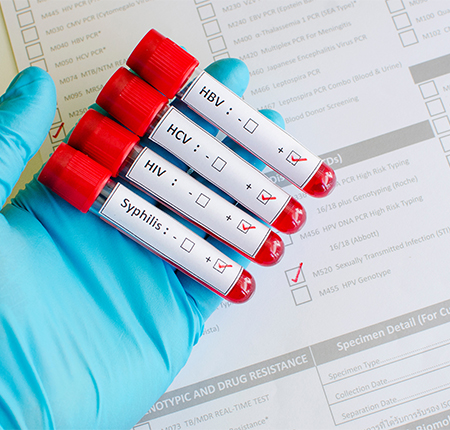
- Sexually transmitted infections ‒ With or without ejaculation: intercourse without a condom does not protect you from a sexually transmitted infection. Viruses, bacteria and parasites are transmitted not only via semen, but through intimate contact. So the method offers you no protection against conditions such as chlamydia, gonorrhoea, trichomoniasis, HIV and others.
- The unreliability of the method ‒ Even if you do everything by the book and your partner withdraws in good time, you can still become pregnant. That's because sperm are present not only in semen but also in pre-ejaculate – so pregnancy can occur even without ejaculation. However well your partner controls the moment of ejaculation, he simply cannot control this fluid during intercourse. The failure here lies solely with the method itself.
The good news is that there are plenty of other contraceptive methods offering you considerably better protection – including against sexually transmitted infections. We'll talk about those towards the end of the article.
The risks of coitus interruptus
If just one single thing goes wrong with coitus interruptus, the contraceptive protection is gone. That makes it a very risky method from the outset. So that you have a clear overview, we've gathered together the biggest risks associated with this method:
- Your partner may ejaculate prematurely, leaving him no time to withdraw in time
- Sperm can still reach the vagina via pre-ejaculate
- You can contract a sexually transmitted infection
- Sexual pleasure can diminish for you both because of the stress, since instead of enjoying the sensations you're both concentrating on controlling the moment of ejaculation
Why coitus interruptus is so widespread
So if it's this risky and you can still get pregnant despite using coitus interruptus – why is it still being used? Well, aside from a lack of accurate information and all the drawbacks we've discussed, couples do have a few understandable reasons for continuing to trust it:
- It's always available: it requires no financial outlay, no time and no effort to obtain and use other contraceptives
- It can be used spontaneously: so it also suits unplanned, spur-of-the-moment sex, for which you and your partner haven't prepared with other contraceptives
- It causes no direct hormonal imbalance: unlike the contraceptive pill, for example, coitus interruptus itself doesn't affect hormone levels and has no other side effects (except in cases where a partner transmits a sexually transmitted infection, which can disrupt hormonal balance)
- It carries no religious implications: unlike condoms, contraceptive pills or other methods rejected by certain religions or cultures.
The best alternatives to coitus interruptus
But let's come back to reality: one in five women who rely on coitus interruptus alone becomes pregnant – and those figures are not to be dismissed. So it's important to know that even when used correctly, the risk of an unwanted pregnancy remains.
On top of that, it offers you no protection whatsoever against sexually transmitted infections – which makes it particularly unsuitable if you have a new partner or change sexual partners frequently.
That's why we'd advise you not to place too much faith in its protective potential and instead to turn to other contraceptive methods whose effectiveness is medically proven. And because we want you to be thoroughly informed by reliable sources, we'll tell you ourselves the key details about the best alternatives to coitus interruptus.
The male or female condom
This is the best-known and most effective barrier method of contraception, single-use, protecting you both from an unwanted pregnancy and from sexually transmitted infections, because it prevents direct contact between the penis and the vagina.
The male condom is worn by your partner; it prevents semen or pre-ejaculate from entering the vagina. Here's what you should know about it:
- When used correctly, it is 98% effective at preventing unwanted pregnancy.
- Male condoms are made from various materials, though most are made of latex.
- Most condoms come ready-lubricated.
- With latex condoms, you can use a water-based lubricant.
- Don't use oil-based lubricants with latex condoms, as they can split and lose their protective effect.
There are also female condoms, which are inserted into the vagina up to 8 hours before intercourse and likewise prevent semen or pre-ejaculate from coming into contact with your body. Their main advantage is that you have greater control over contraception (you're no longer dependent on whether your partner is willing to wear a condom or not). But there are benefits for your partner too: the feeling of being "constricted" disappears, and sensation isn't restricted as much as with a male condom. Used correctly, female condoms are 95% effective at preventing unwanted pregnancy.
The contraceptive pill
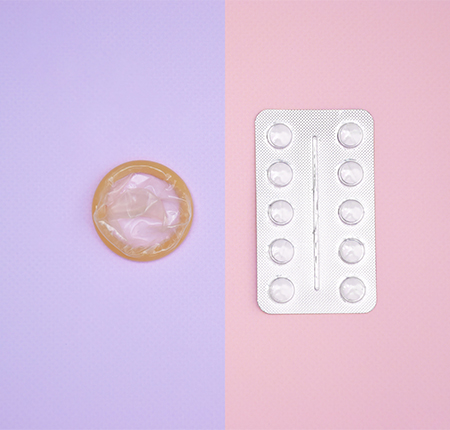
This time we're talking about an oral method of contraception: the pill is another way of preventing pregnancy, used by a great many women. Its drawback is that it introduces synthetic hormones into your body, which can cause hormonal imbalances and various side effects. It also offers no protection against sexually transmitted infections.
On the plus side, it gives you the advantage of being in control, so that pregnancy doesn't depend on your partner's decisions. The pill may also be prescribed by your gynaecologist to regulate your menstrual cycle. If you'd like to learn more about contraceptives, we've written a blog article explaining everything you need to know. You can read it HERE.
At this point we should also mention the "morning-after pill". This too is a hormonal contraceptive pill that prevents pregnancy using synthetic hormones – but we'd advise against taking it frequently. It is emergency contraception for situations where no other contraceptive method was used or where it failed. Frequent use is not advisable, as it can cause hormonal imbalances and long-term side effects.
The copper coil
The copper coil is a T-shaped plastic device wrapped with copper wire. It is inserted into the uterus and triggers an inflammatory response that is toxic to sperm. In practice, the copper acts as a spermicide, preventing fertilisation and therefore pregnancy for up to 10 years.
It's important to know that the coil is a medical device and is not intended for you to fit yourself. Only a gynaecologist can safely insert and remove it using the appropriate instruments. So don't try to insert it yourself – book an appointment with a specialist instead.
The vaginal ring
Like the contraceptive pill, the vaginal ring works via hormones that prevent the egg from implanting and therefore stop a pregnancy from beginning. The difference is that it isn't taken orally but inserted into the vagina. It's made of flexible, thin plastic, and you can insert it yourself without medical assistance.
Even so, we'd recommend speaking to your gynaecologist before using a vaginal ring, so that you receive the necessary guidance and can be confident of reliable results. Depending on the type of ring, you'll need to remove it after a certain period and take a few days' break before inserting a new one.
If you remove it during intercourse, you'll also need to reinsert it within a maximum of three hours. Your gynaecologist can give you all this information and further useful tips on using this method of preventing pregnancy.
Vasectomy
We'll round off the list of contraceptive alternatives with a method that this time puts your partner in control, without depending on your decision to use a contraceptive or not. This is a low-risk surgical procedure, almost 100% effective, carried out under local anaesthetic, which involves sealing the vas deferens so that sperm can no longer enter the semen and therefore the partner's vagina.
It is a permanent method of contraception – sterilisation – which men who no longer want children may opt for. Afterwards, you and your partner can enjoy a sex life without the risk of another pregnancy, and without having to use any other contraceptive method.


Medium, super or extra absorption

Low, medium or super absorption

Low or medium absorption


and happily breaking taboos!


