

Tips from a psychotherapist: how to feel (better) during your period
For some people, their period and the days leading up to it are anything but the easiest moments – however much we'd like to believe what the adverts tell us about the menstrual cycle: no, not every woman feels like she's on cloud nine when wearing a tampon (even if a tampon made from 100% organic cotton lets the skin breathe and doesn't cause allergies or infections)!
Instead, you may feel as though you're on a rollercoaster: from leaden exhaustion to anger and the urge to withdraw, right through to anxiety or low mood. You might find yourself losing control of your own emotions. And if this happens to you every single month, there may be more to it than straightforward premenstrual syndrome. Medically speaking, there's a condition that's less visible during menstruation but has a negative impact on your mental health: premenstrual dysphoric disorder.
We had countless questions of our own about what lies behind these moods – and more than that: we want to help you understand yourself better! That's why we asked an expert. And so our conversation with psychologist Dr Raluca Anton came about.
Mental health and the menstrual cycle
“My academic experience and my training mean that my approach is always grounded in science and in studies that demonstrate the quality of a piece of information. Beyond that, the idea of empathy and human connection steers me towards an approach strongly focused on human relationships – on the fundamental need for connection and emotional safety in our relationships with the people around us. A safety that, once achieved, can bring enormous benefits.” (Dr Raluca Anton)
Dr Raluca Anton is trained in cognitive behavioural therapy and completed her doctorate at the Department of Clinical Psychology and Psychotherapy at Babeș-Bolyai University. She has published numerous scientific articles, co-authored several specialist psychology books, delivers professional training for psychologists, and is among the first therapists in Romania to be IMAGO-trained in relationship therapy.
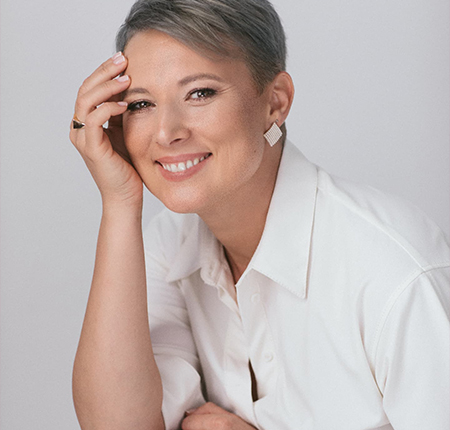
And because menstruation can have a significant impact on our mental – and physical – health, particularly when we don't recognise what's going on in the body, we asked her how we can take better care of ourselves at this time of the month.
ENROUSH: How can we listen to our bodies better, or more attentively?
Dr Raluca Anton:
I believe the healthiest thing we can do is to practise paying attention to our own body's responses every day. A good exercise is a check-in at the start of each day, where we simply ask ourselves: what am I feeling in my body right now? And perhaps a check-out at the end of the day with the same question. Pausing throughout the day and being attentive to ourselves would be the next step towards getting to know the body's responses.
When premenstrual syndrome means more than cramps and sore breasts – and you experience unexplained low mood and anxiety every month – then we may be talking about premenstrual dysphoric disorder (PMDD). One in twenty women lives with this condition, and the symptoms can vary from person to person. Common ones, however, include mood swings, sudden sadness or sensitivity to rejection, irritability or anger, depression, low self-esteem and heightened anxiety.
ENROUSH: How can premenstrual symptoms affect our quality of life?
Dr Raluca Anton:
Beyond the physical discomfort, premenstrual syndrome also comes with emotional disturbance. Usually we're talking about a markedly lower tolerance for frustration than at other points in the month, anxiety symptoms that can also arise as a consequence of the body's physical responses during this time (for example, a tightness in the chest, shallow breathing, weakness in the limbs), and a depressed mood. All of this is also bound up with each woman's personal history and with the predisposition we have towards one emotional category or another. Along with these states, our interactions with the people around us change too, as does our capacity to cope with situations – which increases the likelihood of making mistakes at work, for instance.
How to get a handle on mood swings
When we talk about menstruation-related complaints, premenstrual dysphoric disorder is often an invisible condition: the causes are unknown and there is no cure. The symptoms are frequently ignored or, worse still, dismissed as a “normal part” of this time of the month – which only entrenches the stigma and shame surrounding menstruation.
This brings additional mental health problems with it. Because whether diagnosed or not, premenstrual dysphoric disorder is a challenge for menstruating people in every area of life – it affects us at work, socially and in our relationships. In some cases the symptoms can be so severe that they lead to suicidal thoughts. Knowing how to look after ourselves properly can be crucial in such situations!
ENROUSH: How can we recognise mood swings and bring ourselves into a state of presence, of grounding?
Dr Raluca Anton:
The better we know our body and its responses – not only during difficult phases, but in everyday life too – the more present we can be in our bodily story. We recognise mood swings more easily, and once we recognise them, the best step is to move into the territory of “grounding” – a state of presence, or anchoring in the present moment.
For each of us, this state of presence can be reached in different ways. One classic technique we use in practice is four-count breathing: breathe in for a count of four, hold for a count of four, breathe out for a count of four. A technique that helps the body be in the here and now.
ENROUSH: How do we deal with irritability or anger?
Dr Raluca Anton:
The best thing we can do is turn our attention to the resources available to us in those moments: going for a walk, doing those grounding exercises, having a conversation with someone we trust.
Another way of handling irritability or anger – especially when interacting with others – is to tend to our relationships. Anger is one of the most powerful forces that erodes a relationship. In the context of menstruation in particular, it's important to tell others: “I'm at this point in the month, and you know I'm not feeling my best – I've got these hormonal changes that can make me irritable.”
This predictability that we build into our relationships helps others not to add fuel to the fire, but to meet our states and what's happening to us with understanding.
ENROUSH: Is mental health important for the menstrual cycle? How can we let go of our preconceptions so that we take our symptoms seriously?
Dr Raluca Anton:
Mental health is enormously important for the menstrual cycle. There are already specialists telling us that attentiveness to our states and our body's responses leads to better emotional and relational health. Connecting with your own body and paying attention to how it expresses itself are things we should really be doing every day – and all the more so during menstruation, when we know mood swings occur.
Quite clearly, we carry a great many preconceptions with us. But the menstrual cycle is something normal, just as pregnancy is something normal.
Women have had their periods since the dawn of time – so why make a tragedy of it? First of all, the reason we make a “tragedy” of it now is precisely because we know today that there are solutions.
There are methods that can help us feel better during this time – we don't have to grit our teeth and simply long for comfort. There are countries that grant days off during menstruation to support women, which benefits both emotional and physical health. Without taking advantage of how long menstruation lasts, these days can be a resource that helps us feel more at ease in our own bodies.
ENROUSH: So how can we set boundaries with the people around us (family, colleagues, friends) when we need time and space – or ask for support and help when we need it?
Dr Raluca Anton:
Most of the time, we only set boundaries at the moment we're already suffering. And then those boundaries get set in an aggressive way – either through silence or through anger. I don't think it's helpful to set these boundaries during an emotionally difficult phase; it's better to do so the rest of the time – on the principle of “strike while the iron is cold, not while it's hot” – so that the information we're conveying has a chance to settle. If we deliver it in a moment of high emotion, we're most likely doing so in a way that doesn't reach the other person.
I believe the best thing we can do is have open conversations with the people around us about what's happening to us – emotionally and physically – without feeling ashamed or believing there's something wrong with us.
How we cope with menstruation
Whether we're talking about PMS or symptoms of PMDD, there must be things we can do to feel better during our period. Lifestyle changes, for example, avoiding certain foods or substances, self-care rituals or breathing techniques.
ENROUSH: What tips are there? Which activities are good for mental health before, during and after menstruation?
Dr Raluca Anton:
The most beneficial activities are those in which we stay with ourselves, understand what's happening to us, and connect effectively with the people around us. If we practise this movement between our inner and outer worlds, both the anxiety and the intensity of our reactions diminish over time. They don't disappear, but they become less intense and less frequent.
It's long-term work, and the effects show up in proportion to how much we practise and learn to be as integrated within ourselves and as connected to ourselves as possible.
Today's solutions for a healthy period
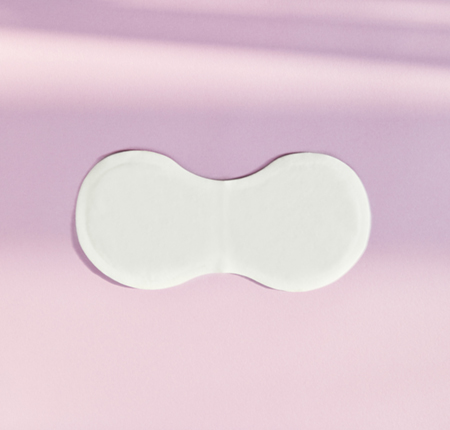
When it comes to today's solutions, you have the advantage that, for one thing, you no longer have to grit your teeth if you'd rather not take tablets for cramps: there are heat patches that give you up to 8 hours of comfort – using nothing but natural ingredients.
And alongside all these tips, what you use month after month to manage your flow matters too – because these products can affect your body's health either negatively or positively. Our advice, then, is this: always choose safe, sustainable, natural and organic products that are not only practical and kind to the planet, but also give you the comfort you need – and the reassurance that they won't cause irritation or infections, as perfumed or chemically bleached period products can.

Medium, super or extra absorption

Low, medium or super absorption

Low or medium absorption


and happily breaking taboos!


