

What does the fertile window mean?
Besides good health – what else can help you get pregnant? Sex, of course – and above all, at the right time!
Ovulation (fertile days) & the calendar method – How do you work it out?
We're talking about the fertile days, meaning those days in a woman's menstrual cycle when pregnancy is highly likely. This so-called "fertile window" depends on the length of the menstrual cycle, which varies from woman to woman.
What do the fertile days mean?
Fertility refers to a person's ability to have children. The fertile days are those days of the menstrual cycle when the chances of getting pregnant are high. Working out your monthly fertile window can help you choose the best time for intercourse when you're trying to conceive. As a form of contraception, however, natural family planning is less reliable and offers no protection against sexually transmitted infections.
Let's start by understanding a little more about the menstrual cycle.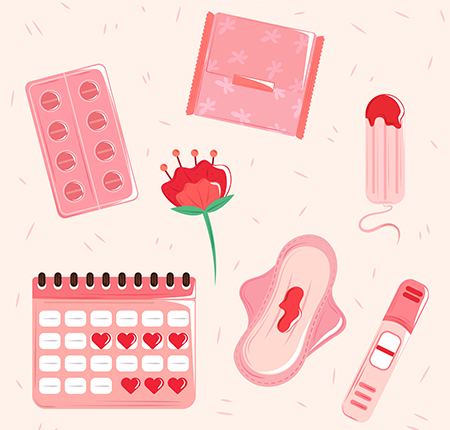
The menstrual cycle is the way your body prepares for pregnancy. It begins on the first day of your period; a typical menstrual cycle lasts 28 days, although any cycle between 21 and 35 days is considered normal. With the next period, the cycle starts all over again.
Throughout the cycle, numerous changes take place in your body, including hormonal fluctuations. Around the middle of the cycle, one of the ovaries releases a mature egg. The egg travels into one of the fallopian tubes, where it waits to be fertilised by sperm. At the same time, the lining of the womb thickens. In this way, the uterus is prepared for the implantation of the fertilised egg.
If you don't become pregnant, it may mean that the egg wasn't fertilised, or that the embryo (the fertilised egg) didn't implant in the womb. In these cases, the womb lining breaks down and your period begins.
Fertile days – symptoms of ovulation
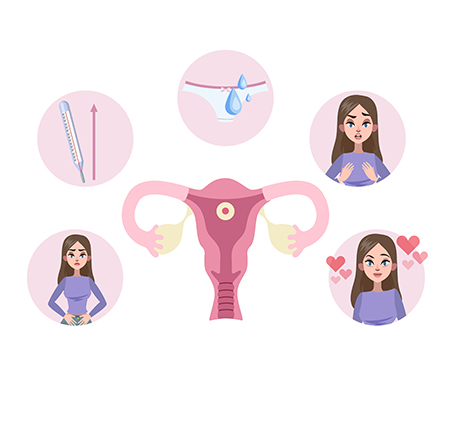
Some of the symptoms that may occur during ovulation include:
- A change in basal body temperature: it dips slightly and then rises (the most fertile time is the 3 days before the temperature rise);
- A change in cervical mucus: it becomes clearer, thinner and more slippery in consistency;
- Slightly tender, sensitive breasts;
- Abdominal cramps;
- Increased libido.
How do you work out your fertile days?
If fertilisation doesn't take place within 24 hours (the lifespan of the egg) of its release from the ovary, the egg breaks down. Sperm can survive for roughly 3 to 5 days – so if you know when ovulation occurs, couples can work out their most fertile time.
The most fertile days are considered to be the three days before ovulation as well as the day of ovulation itself. From 12 to 24 hours after ovulation, a woman can no longer conceive in that cycle, as the egg is no longer in the fallopian tube.
There are various methods for working out your fertile days. Let's take a look at them together.
The calendar method
Each month, mark the first day of your period on a calendar or in a cycle-tracking app. The number of days between the first day of two consecutive periods is the length of your menstrual cycle. To gather meaningful data, you should do this for at least six months.
Ovulation takes place roughly 12 to 14 days before the start of a new menstrual cycle. Your fertile window covers the 5 days before ovulation, the day of ovulation itself and the day after – around 7 days in total.
Worth knowing: if your periods are irregular and your cycle length varies from month to month, the calendar method won't give you reliable guidance and is often inaccurate.
This method can be helpful if you're trying to conceive, but it is not an effective form of contraception.
Tip: there are plenty of apps online that can help you calculate your fertile days using the calendar method.
The basal body temperature method
With this method, you take your temperature every morning as soon as you wake up (before you even get out of bed). Use a basal thermometer (it's more accurate than an ordinary one), which can be used orally or rectally. It measures body temperature to a tenth of a degree.
A woman's basal body temperature rises slightly around ovulation. If you record your temperatures in the run-up to ovulation, you should notice a sustained rise in basal body temperature afterwards.
Worth knowing: the basal body temperature method isn't suitable for predicting ovulation if you're trying to conceive. It's best combined with monitoring your cervical mucus and with the calendar method.
Monitoring cervical mucus
The hormonal fluctuations across the menstrual cycle alter the amount and consistency of vaginal mucus. You should look at and feel your vaginal mucus every day and record the results in a chart. You're probably ovulating (and at your most fertile) when the mucus is plentiful, wet and slippery, with the consistency of raw egg white.
You should track your vaginal mucus over at least one menstrual cycle. At first it can be hard to tell what you're looking for – so do speak to your gynaecologist if you'd like to try this method.
Ovulation test
Ovulation tests are a useful tool if your periods are regular but you're still unsure whether you're correctly interpreting the natural signs of ovulation (cervical mucus or a rise in basal body temperature). Ovulation tests measure the level of luteinising hormone in your urine. When this hormone level peaks, it means you're in your fertile phase.
If your periods are irregular, these tests can be unreliable.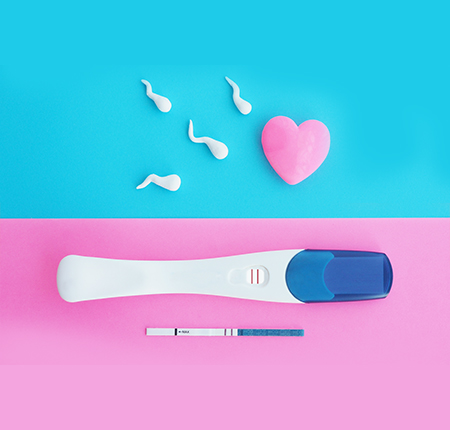
Other ways to determine your monthly fertility
There are also saliva tests that measure oestrogen levels, which rise before ovulation. They can be used by women with both regular and irregular periods. Such tests are usually very straightforward to use.
Other signs that may point to ovulation include the symptoms already mentioned, such as increased libido, abdominal cramps, spotting or breast tenderness.
Ovulation can also be monitored by transvaginal ultrasound, by observing the follicles, which need to reach a certain size shortly before maturing.
Why is it helpful to know when ovulation happens?
If you know when you ovulate, you can choose the right moment for intercourse that could lead to pregnancy. This allows couples to work out the day on which their chances of conceiving are greatest.
What's more, tracking your menstrual cycle helps you notice hormonal changes and understand your body better. And if you want daily protection and care for your most delicate area, choose organic care with 100% natural ingredients. The women behind Enroush understood that the secret to a healthy menstrual cycle lies in pads and tampons free from plastic, synthetic fibres and fragrance. Out of love for nature, we've created products that look after you and the planet – with no compromises. A timeless mission, natural care.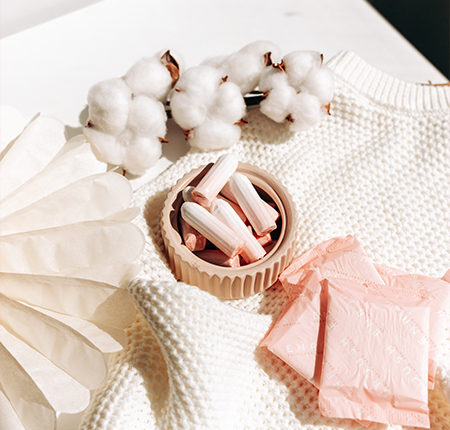
When should you have sex if you want a baby?
For the best chances of conceiving, you should have sex every day or every other day – specifically:
- on the five days before ovulation
- on the day of ovulation
- on the day after ovulation
There's a great deal of misinformation about which practices supposedly boost your chances of getting pregnant. There is no particular sexual position that increases your chances of conceiving.
Be careful with some lubricants: they can affect sperm and prevent them from reaching the egg. To be on the safe side, talk to your gynaecologist and ask which lubricants you should avoid.
Why didn't I get pregnant despite my fertile days?
MYTH: A woman can get pregnant at any point in the month.
FACT: A woman can only get pregnant on a few days of her menstrual cycle.
Why? Eggs and sperm only live for a short time: sperm survive around five days, while eggs can only be fertilised for about 24 hours (one day) after being released from the ovary. The egg and sperm have to meet at just the right time for fertilisation to take place and an embryo to form.
For you, this means: most likely you didn't have sex within your fertile days. However, if you haven't managed to conceive after 3 to 4 cycles of trying, we'd recommend seeing your gynaecologist to rule out any medical cause.

Can I get pregnant outside my fertile days?
In theory, pregnancy is only possible if you have sex in the five days before ovulation or on the day of ovulation itself. However, tracking ovulation is not a reliable form of contraception, and we wouldn't recommend relying on it if you don't want to get pregnant.
If you'd like to read more about pregnancy – and pregnancy tests in particular – here you'll find out how pregnancy tests work, how accurate they are and what happens after a positive result.

Medium, super or extra absorption

Low, medium or super absorption

Low or medium absorption


and happily breaking taboos!


