

Why intimate skin loses its elasticity as we age — and how you can support it
Do you sometimes feel that the skin in your intimate area isn't as firm and velvety as it once was? That your sense of comfort has gradually faded without you quite knowing why? And that dryness is making you a little more cautious in intimate moments?
You're not alone. With every stage of life we pass through, the intimate area changes just as the rest of the body does. The skin's elasticity decreases, and some changes are felt more than they're seen. The good news is that there are simple, effective ways to support firmness and comfort in this area — even when hormonal fluctuations and the passing of time leave the skin less supple.
What does intimate skin elasticity actually mean, and what does it have to do with your everyday comfort?
Skin elasticity describes its ability to return to its original shape after being stretched. In the intimate area, this ability is far more than a question of aesthetics — it's essential to the comfort and self-assurance you carry with you every day.
Elastic skin moves with you without creating any sensation of friction, tightness or restriction, during exercise for instance. When it's well hydrated and retains its elasticity, it stretches easily and adapts to your movements — which also helps make intimacy feel pleasurable. That way you can feel relaxed in your own body, and it shows in your posture and the way you carry yourself.
Over the years, however, skin can begin to lose its tone and suppleness. It may then feel thinner, drier and less elastic. This is precisely how the discomfort that can affect your intimate experiences arises.
All of these changes are perfectly normal and come about through the decline of collagen as well as the hormones that regulate the skin's moisture and elasticity.
What role does collagen play in skin elasticity?
Collagen is the most abundant structural protein in the body and an essential component of connective tissue. Your skin owes its ability to stretch and to regenerate after injury to collagen fibres. They give it firmness and elasticity, keeping it supple and well hydrated.
The body produces collagen naturally to maintain the skin's vitality. From around the age of 25 to 30, however, this natural production gradually declines — and the effects are visible and noticeable on the face and hands as well as in the intimate area.
The influence of menopause and hormonal changes
Did you know that hormones — oestrogen in particular — play a decisive role in skin elasticity? At certain stages of life, such as after childbirth or during perimenopause, oestrogen levels fall and can have a direct impact on your intimate area.
As you approach menopause, declining oestrogen levels are among the main factors that can cause dryness, sensitivity, reduced tissue tone and a loss of firmness in the intimate skin.
It's important to know that these changes are normal — but that doesn't mean you have to simply put up with the discomfort. It simply means your intimate area now needs a little more attention. It's not about learning to live with these symptoms, but about understanding how to support your skin so you can maintain your everyday comfort throughout these changes.
What you can do to maintain intimate skin elasticity
All our lives we use all manner of creams and serums on our faces to preserve their elasticity and radiance. So why not treat the intimate area the same way?
Even though hormonal changes and the passing of time are inevitable, simple care routines can help your intimate skin stay supple, well hydrated and comfortable.
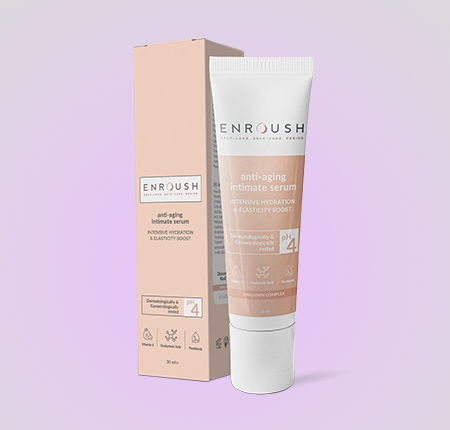
Establish a daily care routine
Did you think anti-ageing was a term reserved exclusively for facial skincare? Sadly, millions of women don't yet know they can give their intimate skin the same attention they give their face — so they can keep feeling good at every stage of life.
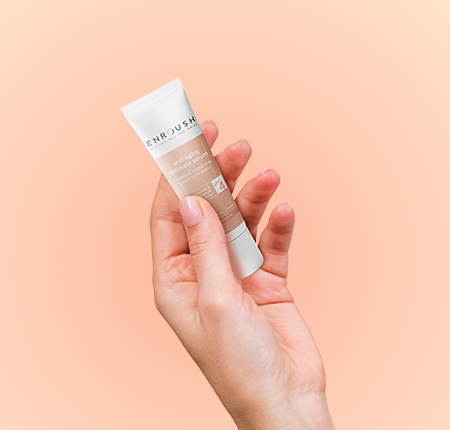
That's exactly why we developed the Enroush Anti-Ageing Intimate Serum. Formulated in collaboration with gynaecologists and dermatologists specifically for this delicate area, our serum helps maintain firmness and optimal hydration. Used daily, it becomes your ally for supple, velvety, comfortable intimate skin — whatever your age or hormonal stage of life.
Don't overlook how you nourish your body
Did you know that everything you eat affects your skin's elasticity? Adequate fluid intake and foods rich in collagen, antioxidants and vitamins C and E are essential to support the skin's natural regeneration.
Natural sources that provide your body with these nutrients include fish, nuts, colourful vegetables and vitamin C-rich fruits. And if natural production has declined significantly, you might also consider taking collagen supplements.
Work on your muscle tone
As well as benefiting the health of the genital area, Kegel exercises and other activities that strengthen the pelvic floor muscles also help maintain the elasticity of the intimate skin. They boost local circulation — and that means more oxygen and better natural hydration.
Always talk to your gynaecologist
All of the measures above can make an enormous difference to your everyday comfort — but none of them replaces medical advice. They simply complement the recommendations you receive from your doctor.
If the discomfort becomes distressing or your skin noticeably loses elasticity — particularly as you enter a new life stage such as pregnancy or menopause — do speak to your gynaecologist. They can recommend topical oestrogen therapies or other safe solutions for a healthy intimate area.
Care for your intimate skin every day — for lasting comfort
Over time, the elasticity of intimate skin decreases. That's a fact, rooted in natural and inevitable processes within the body, such as hormonal changes and ageing.
But do you know what's wonderful about it? You can accompany all these changes with simple daily care habits. Your skin needs only hydration, a balanced diet, regular exercise and a slightly more attentive care routine to stay supple and elastic over the years. The Enroush Anti-Ageing Intimate Serum is the perfect ally in this routine, giving your skin its very own anti-ageing ritual.
Isn't it fascinating how just a few minutes a day can make such an enormous difference to how you feel in your own body at any age?

Medium, super or extra absorption

Low, medium or super absorption

Low or medium absorption


and happily breaking taboos!


