

Everything you need to know about gonorrhoea: causes, symptoms & treatment
If you suddenly notice that your discharge has turned a yellowish-green colour, or that you feel a burning sensation when passing urine, and this follows unprotected sexual intercourse, you may have contracted gonorrhoea. It's a common sexually transmitted infection that can affect both women and men.
But a possibility is not a certainty: because the symptoms of gonorrhoea closely resemble those of thrush and other infections, you can't say for sure whether it really is gonorrhoea. Only a doctor can make the correct diagnosis – so a specialist examination should be arranged as soon as possible.
And what exactly are those symptoms? Which changes in your body might point to a gonorrhoea infection, and what else should you know about the causes, onset, diagnosis and treatment? Below you'll find all the answers, so that you can avoid gonorrhoea and its potential complications.
What is gonorrhoea
Gonorrhoea (the clap) is a very widespread sexually transmitted infection caused by the bacterium Neisseria gonorrhoeae (N. gonorrhoeae, or gonococcus). This bacterium infects the mucous membranes of the reproductive tract, which in women means the following organs may be affected:
- Cervix
- Womb
- Fallopian tubes
In addition, N. gonorrhoeae can infect the mucous membranes of the urethra, rectum, mouth or throat in both women and men.
Gonorrhoea – causes
Gonorrhoea is caused by infection with the bacterium N. gonorrhoeae. Let's look now at how you might catch it and the routes by which it is passed on.
The only way the bacterium can enter the human body is through unprotected sexual intercourse. That means any kind of contact with the penis, vagina, mouth or anus of an infected partner – even if there is no ejaculation.
In short: infection with gonococci occurs on contact with vaginal or penile secretions containing this bacterium. The main causes of catching gonorrhoea are therefore:
- Vaginal, oral or anal sex with an infected partner without a condom
- Sharing sex toys without disinfecting them beforehand or using a new condom each time.
- Gonorrhoea can also sometimes be passed from mother to baby during birth – we'll look at this in more detail at the end of the article.
It's important to remember: gonorrhoea is a sexually transmitted infection and therefore isn't spread through other forms of contact. The bacterium survives only very briefly outside the human body. So there's no need to worry if you hug an infected person or share other things with them. Gonorrhoea is not transmitted via shared plates, cutlery or towels, nor through public swimming pools or toilets.
How common is gonorrhoea
Gonorrhoea is one of the most common sexually transmitted infections, and a large proportion of cases occur in young people aged 15 to 24.
According to data gathered in 2021 in the USA, gonorrhoea is the second most common bacterial sexually transmitted infection.
In Europe, reports from 2021 confirm a total of 46,728 cases of N. gonorrhoeae infection across 27 countries.
These figures are only estimates, however. The reality is likely to be considerably worse, since many infections cause no symptoms and therefore go unreported and untreated.
How does a gonorrhoea infection begin in women and men
Both women and men are symptom-free in most cases. That is to say, there are virtually no signs pointing to a gonorrhoea infection. And when symptoms do appear, they do so within the first 2 to 14 days after infection – and they are so mild that they can easily go unnoticed or be mistaken for other infections of the intimate area.
In women, the first signs of the condition are:
- Pain when passing urine (dysuria)
- Increased vaginal discharge
- Bleeding between periods
In men, the first signs can appear at any point between the first and the 14th day after infection and include:
- Dysuria (the first noticeable symptom)
- Whitish, yellowish or greenish discharge
The onset of gonorrhoea is easily missed – not least because around 50% of women and one in ten men show no specific symptoms at all.
Who is most at risk of gonorrhoea
Anyone who is sexually active is at risk and can contract gonorrhoea through unprotected sexual intercourse (i.e. without using a barrier method).
People who don't usually use a condom, or who have frequent changes of partner, therefore have a considerably higher risk of contracting N. gonorrhoeae.
Symptoms of gonorrhoea
Gonorrhoea infections can go untreated in the body for a long time, because a great many people – both women and men – have no complaints at all. When symptoms do occur, they generally present as:
- Pain when passing urine
- Discharge that changes in consistency and colour
- Discharge, itching, bleeding or pain in the anal area in cases of rectal infection
- Sore throat in cases of throat infection
- Conjunctivitis, itching, irritation and eye pain if infected vaginal fluid or semen gets into the eyes
These are the general symptoms, which occur equally in women and men. Below you'll find out specifically which symptoms gonorrhoea causes in men and in women.
Gonorrhoea symptoms in men
Men may notice the following signs within the first two weeks after infection:
- Burning or pain when passing urine
- Unusual whitish, yellowish or greenish discharge from the tip of the penis
- Swelling (inflammation) of the glans
- Tenderness or pain in the testicles
Gonorrhoea symptoms in women
In women too, the symptoms of gonorrhoea are fairly non-specific and can easily be mistaken for those of another urinary or vaginal infection:
- Unusual yellowish or greenish vaginal discharge with a thin or watery consistency
- Bleeding between periods
- Heavy menstrual bleeding
- Bleeding after intercourse
- Burning or pain when passing urine
- Pain or tenderness in the lower abdomen
It's important to understand that only a doctor can make the correct diagnosis after testing, because the symptoms alone are not conclusive. All of these signs are non-specific and also occur with infections such as chlamydia or thrush. We've already written about thrush in another blog article, as it's a very common infection that can happen to any woman – we want you to have all the information to hand and to feel that little bit better prepared.
How is gonorrhoea diagnosed
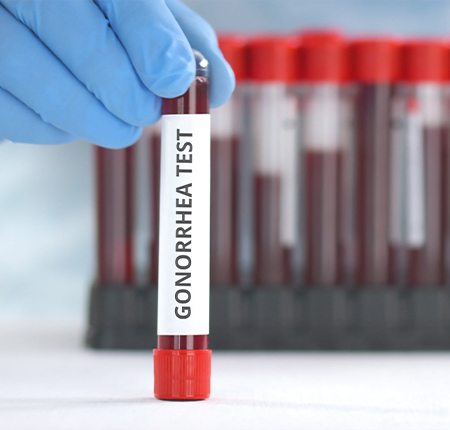
A specialist will only diagnose gonorrhoea after testing (laboratory analysis of samples taken quickly and painlessly from vaginal or urethral secretions). This is the only way to confirm whether a person has gonorrhoea or another sexually transmitted infection.
In women, the sample of secretion is taken with a swab from the cervix or the vagina – either by the doctor or by the patient herself. Sometimes the doctor will also take a sample from the urethra.
In men, both a sample of the discharge from the penis and a urine sample can be examined.
You can be tested just a few days after intercourse if you suspect you've been infected – though it's generally recommended that you wait at least 7 days. Otherwise, you can also get tested without having any symptoms at all, and there are several options available to you:
- With a specialist (a gynaecologist for women, a urologist for men, or a dermatologist/genitourinary medicine specialist for both women and men)
- At a private clinic
- You can buy a self-test at the pharmacy and carry it out yourself
The sooner the diagnosis is made, the sooner suitable treatment can begin in order to avoid further complications. Some clinics can give an immediate diagnosis if the doctor examines the sample directly under a microscope. If the samples are sent off to a laboratory, it can take up to 2 weeks for the results to come back.
Treatment of gonorrhoea
Gonorrhoea is treated with antibiotics, given either by injection or orally. Treating yourself at home with "home remedies" or other natural alternatives is not advisable. Only antibiotics treat infection with the bacterium N. gonorrhoeae quickly and effectively.
Both the infected person and their sexual partner or partners are treated. It's also recommended that you avoid all sexual intercourse until the treatment has been completed, in order to prevent transmission.
Symptoms (where present) improve within the first few days. If the condition has already progressed to the point where it is causing pain, however, it can take up to 2 weeks for this to disappear.
One to two weeks after finishing treatment, you will usually have another medical examination and a repeat test to confirm that the infection has cleared.
Complications of gonorrhoea
If gonorrhoea goes untreated, symptoms become increasingly severe, and serious complications and lasting consequences can develop – in both women and men:
- Untreated gonorrhoea can spread to the blood and lead to disseminated gonococcal infection, as well as further health problems such as arthritis, tenosynovitis and dermatitis.
- Untreated gonorrhoea can also increase the risk of HIV infection.
- In women, the infection can spread to the womb and fallopian tubes and trigger pelvic inflammatory disease (PID), with severe abdominal pain and fever. If this too is left untreated, it can damage the fallopian tubes and increase the risk of ectopic pregnancy and infertility.
- In men, gonorrhoea can cause complications such as epididymitis – an inflammation that causes pain in the scrotum and, in rare cases, can lead to infertility.
How does gonorrhoea affect a pregnant woman
Pregnant women who have gonorrhoea should be treated as soon as possible, since the bacterium can harm both the pregnancy and the baby. Infection during pregnancy can lead to:
- Miscarriage
- Premature birth
- Transmission of the infection to the baby during delivery
- The baby being born with conjunctivitis
It's important that the mother is cured of gonorrhoea before a vaginal birth. Passing the infection to the baby can cause permanent vision problems, joint problems or serious blood infections if antibiotics are not given immediately.
How can you prevent gonorrhoea
You can prevent gonorrhoea being passed on during sexual intercourse, as well as the later complications of infection:
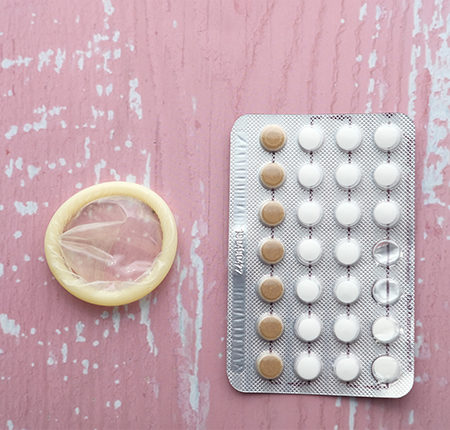
- By using condoms and other barrier methods during every vaginal, oral or anal sexual contact
- By being in a monogamous relationship with a partner who has been tested and is not infected
- By avoiding sexual contact with multiple partners or with people at high risk of infection
- By getting tested whenever you suspect an infection
Gonorrhoea is transmitted through sexual intercourse, so the surest form of prevention is to abstain from any kind of intimate contact. That doesn't mean sexually active people can't protect themselves, though – so always use a barrier method.

Medium, super or extra absorption

Low, medium or super absorption

Low or medium absorption


and happily breaking taboos!


